Building a Professional Digital Presence for a Coaching Business
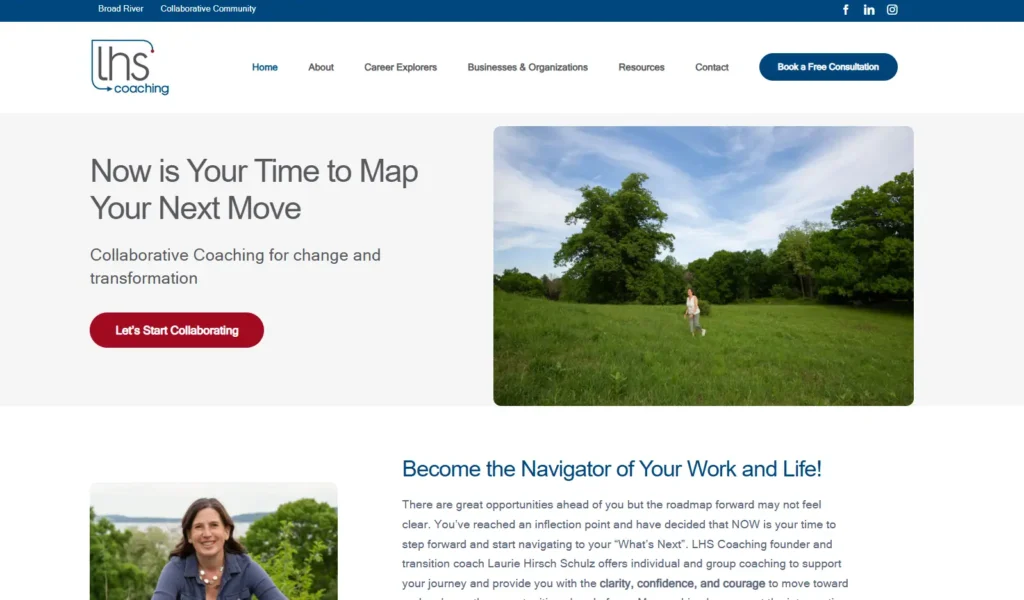
TheMetaFive created a professional website experience for a coaching business – focusing on clear communication, brand presentation, and an intuitive user journey.
The goal was to help potential clients understand the coaching services, explore relevant information, and take the next step through a well-structured digital presence.
Our services
A website that communicates expertise and invites the next step
Industry
Coaching & Professional Services
Services Delivered
Website Dev · WordPress · UX · Responsive
Core Focus
Clear Communication & User Journey
Project Type
Professional Services Website
A first impression that needs to earn trust
Coaching websites often serve as the first point of contact with potential clients. The design needed to communicate the coach's expertise and establish a professional impression from the moment a visitor arrives.
A clear path from interest to action
The site guides visitors through the coaching offering with organized content, straightforward navigation, and clear calls to action — so they can understand the services and take the next step without friction.
From an unclear first impression to a confident digital presence
The Challenge
What the coaching business needed to solve
For coaching and professional service businesses, a website often serves as the first point of contact with potential clients. It needs to communicate expertise, present services clearly, and establish a professional impression from the beginning.
The challenge was to create a website that reflected the coaching brand while making information easy to find and helping visitors understand the value of the services offered.
The website needed to reflect the coaching brand – while making the services clear and the value of the offering easy to understand.
The Solution
How TheMetaFive approached it
TheMetaFive developed a website experience centered on usability, structured content, and professional presentation. The approach focused on organizing information logically and creating clear pathways between sections.
The website combines WordPress development, user experience principles, and responsive design to support an accessible and consistent browsing experience across devices.
A structured, visitor-focused experience – where the coaching services are clear, the navigation is intuitive, and the next step is always obvious.
Key features & focus areas
Six areas that shaped the final website
Professional Brand Presentation
The website presents the coaching business through a polished, professional layout designed to communicate its identity and create a consistent first impression.
Clear Service Communication
Content is organized to help visitors understand the coaching offering, explore relevant information, and identify the next step in their customer journey.
User-Friendly Navigation
A straightforward navigation structure helps visitors move through the website and find the information they need with less effort.
Responsive Website Design
The responsive approach supports a consistent browsing experience across desktop, tablet, and mobile devices - allowing visitors to access the website wherever they are.
Conversion-Focused Content Structure
Page sections and calls to action are arranged to guide visitors toward learning more about the services or making an inquiry.
Search-Friendly Website Architecture
The website structure supports organized content and provides a foundation for search engine optimization through clear page hierarchy and accessible information.
How the homepage is structured
Navigation - orientation
Simple, top-level links so visitors can see the full scope of the website at a glance.
Hero - instant clarity
A strong headline and single primary CTA answering "what do you do and what should I do next?"
Trust bar - credibility
Quick proof points (clients, years, certifications) that reassure visitors they're in the right place.
Australia
Streamline operations, manage data, automate workflows, and provide online tools to customers.
Pakistan
Digitize manual processes, centralize information, and build new online services.
A 9-step web application development process
From understanding your business to launching and improving the application over time.
Understand Your Business
Your business, users, processes, challenges, and objectives.
Define Requirements
Features, user roles, workflows, integrations, and data requirements.
Plan the Application
Structure, UX, database requirements, and technical architecture.
Design the Interface
Clear UI designed around customers, employees, and other users.
Develop the Application
Planned functionality developed and integrated into the app.
Connect External Systems
APIs, payment systems, databases, e-commerce platforms, and services.
Test Everything
Tested across devices, workflows, user roles, and functionality.
Launch
Deployed to the appropriate hosting environment.
Improve Over Time
New features, integrations, security updates, and performance work.
Where does your project likely fit?
Choose the option closest to what you're building to see a rough idea of project scope, timeline, and complexity. Every estimate still needs a proper scoping conversation.
Pick what you're building
You don't need a technical spec to start — just a rough idea of what you need.
What influences web application cost?
Custom web application pricing depends heavily on the project's scope and complexity. The best way to determine the right approach is to first understand what the application needs to accomplish.
FAQs
Frequently asked questions
We can develop business portals, dashboards, booking systems, customer portals, internal tools, workflow applications, management systems, and other custom web applications. The final functionality depends on your business requirements. If you have an idea but aren't sure what type of application you need, contact TheMetaFive and explain the problem you're trying to solve.
Yes. A customer portal can provide users with a secure area where they can access information and interact with your business. Depending on the project, it can include accounts, documents, orders, invoices, appointments, support requests, messages, notifications, and other functionality. The portal can be connected with existing business systems where appropriate.
Yes. Lead workflows can capture information from forms or other sources, organize the data, send notifications, update a CRM, and trigger follow-up processes. AI can also be used to classify or summarize inquiries where appropriate. The automation should be designed around your existing sales process and the tools your team already uses.
Yes. We can develop dashboards that organize important business information into a centralized interface. Depending on the project, dashboards can contain charts, tables, filters, statistics, reports, and status information. The dashboard can be connected to relevant data sources so authorized users can access the information they need.
Yes. We develop custom web applications for Pakistani businesses, startups, organizations, and entrepreneurs. Applications can be used to digitize manual workflows, manage customers, centralize data, create booking systems, build dashboards, or develop new digital products. If you have a process you want to turn into software, contact TheMetaFive to discuss your idea.
The cost depends on the application's features, users, workflows, integrations, database requirements, design, security needs, and infrastructure. A small internal tool can be significantly different from a large customer-facing application. Instead of estimating based only on the idea's name, the requirements should be defined first so the appropriate development approach can be determined.
Start by explaining the problem you want the application to solve. Tell us who will use it, what they need to do, what systems you currently use, and what you want the finished application to accomplish. You don't need a complete technical specification to start. TheMetaFive can help turn your initial idea into requirements, workflows, features, and a practical development plan.